
Black Bear
Lorem ipsum dolor sit amet, consectetur adipiscing elit. Curabitur eleifend elit odio, eu ultricies ante aliquam vitae. Suspendisse ultricies vitae metus sed finibus.
Sed dolor dui, egestas ut justo et, consectetur interdum leo. Nulla mattis consectetur iaculis. In luctus sollicitudin justo sed consectetur. Donec quis faucibus quam.
Pellentesque tincidunt lorem nec pretium ullamcorper. Fusce ac dolor fermentum ex scelerisque ultricies.
Statistics
Complete Black Bear Resource Library
Biology & Behavior
Hunting Guides
Hunting Locations
Everything You Need to Know About Black Bear Hunting
Black bears represent the most accessible and popular bear hunting opportunity in North America.
With huntable populations across much of the United States and Canada, these adaptable animals provide challenging and rewarding hunting experiences for both novice and experienced hunters.
Understanding black bear behavior is fundamental to hunting success.
These omnivores spend much of their time foraging for food, with their diet varying seasonally and regionally.
In spring, they emerge from hibernation hungry and often feed on emerging vegetation, carrion, and newborn ungulates.
Summer finds them consuming berries, insects, and continuing to feed on vegetation.
Fall brings hyperphagia, a period of intense feeding before hibernation, making this an excellent time for hunters as bears are highly active and predictable.
Black bears typically inhabit forested areas with access to food, water, and denning sites.
They’re surprisingly agile climbers and often escape danger by ascending trees.
Their home ranges vary significantly based on habitat quality, with males occupying larger territories that often overlap with multiple females.
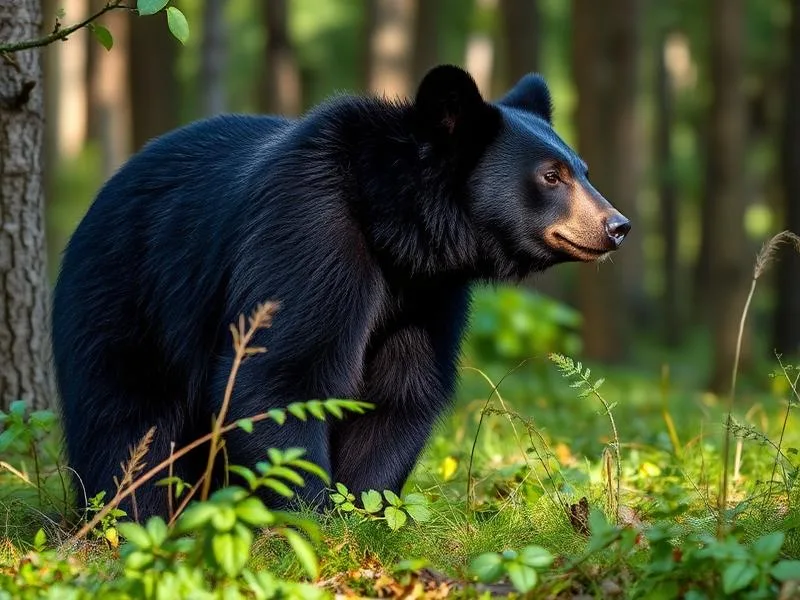
The species exhibits remarkable color variation.
While many are black, color phases include brown, cinnamon, blonde, and even white (the Kermode or “spirit” bear of British Columbia).
Color is not a reliable indicator of subspecies or location, as multiple color phases can occur within the same family or region.
Successful black bear hunting requires understanding sign reading.
Fresh tracks, scat, claw marks on trees, torn logs, and overturned rocks all indicate recent bear activity.
Learning to age these signs helps hunters determine whether bears are currently using an area.
Safety considerations for black bear hunting differ from those for grizzly bears but remain important.
While black bears are generally less aggressive, they can become dangerous when surprised, protecting cubs, or defending food sources.
Proper bear awareness, making noise in dense cover, and understanding bear behavior are essential safety practices.